Welcome to my gardening blog. I'll share with you the plants that can tough it out in south Louisiana.
Wednesday, July 28, 2010
Wildflower Wednesday
This is my Coreopsis. I got this from a wildflower seed pack at Walmart about 3 years ago and it has done wonderfully. Its one of the first flowers to bloom in spring and keeps on blooming until winter. The summer heat doesn't bother it at all! I rarely have to water them.
I love this plant for its bright vibrant flowers. Bees love them too. After pollination, they set seeds and are a reliable re-seeder. Anywhere you scatter the seeds, new plants pop up.
Friday, July 23, 2010
Purple Coneflowers
Purple coneflowers are great addition to a southern garden. They are a reliable perennial, drought tolerant, and the butterflies love them. Birds like to eat the seeds too, so I don't dead head mine.
I got my start with coneflowers from my friend and neighbor Kiki. She had a huge patch of purple coneflowers and was nice enough to dig me up some. She only gave me 3-4 plants, but they have multiplied into a ton of plants! I'm going to divide them soon and give my granny some.
Coneflowers are one of the few plants that tolerate Louisiana summers. They hardly ever wilt and keep blooming all summer long!
Wednesday, July 21, 2010
Garden Invaders
4 O'clocks are one of the toughest plants I've seen. Nothing kills them. This picture was taken at my parent's house in Walker and the 4 o'clocks are over 5 feet tall. These plants have been growing in this flower bed for several years and they have pushed many plants out of their way and taken over the flower bed.
I don't like 4 o'clocks and I've tried to kill these plants several times. I dug most of the tubers out of the bed, thinking that would control them. Didn't work. They came back just as strong next spring. Then I tried spraying Round Up. That made a few leaves turn brown and fall off, but it didn't kill the plants. Since then, I have given up in my war against 4 o'clocks.
There is one redeeming quality of 4 o'clocks.....moths love the flowers. I'm pretty sure Hummingbird Moths like this plant. My favorite moth is the Luna Moth. When I lived in Clinton, LA I'd see this moth all the time. We lived in the middle of the woods and Luna Moths like to live in hardwood forests. Haven't seen any in St. Gabriel.....probably too much sugarcane.
Monday, July 19, 2010
Plant Propagation
Rooting plants from cuttings is a quick and easy way to grow more plants. When I worked at a plant nursery, a lot of people were doubtful that they could successfully grow plants from cuttings. I'd always encourage them to start with something easy to root, like a pothos ivy. That was the plant that I first grew from a cutting. I started propagating plants when I was 11 or 12. After years of perfecting my technique, I'm pretty good at rooting plants. I've grown so many plants from cuttings that I've lost count. Most recently I've grown Gardenia, Firespike, and Turks Cap.
Here are some steps to grow your own plants:
1. Take a cutting from the top portion of the plant. You want your cutting to be a stem that the plant has recently grown. Make sure the cutting is around 7-8 inches long and has plenty of leaves.
2. Carefully pick most of the leaves off your cutting, only leaving a few leaves at the top of the cutting.
3. Gently put the cutting in a pot filled with potting soil.
4. Water after the cuttings are planted. I water my cuttings every other day, unless it rains.
If your cuttings are successful, you should see new growth 2-3 weeks after planting.
The above picture is Pride of Barbados. I took cuttings from an existing plant a month ago, and already they are putting out new growth! This is an excellent plant to give your garden a tropical island feel. Be sure to plant it on a south facing wall because it doesn't like Louisiana winters. If you mulch heavily before a freeze comes, you should be able to save the plant and enjoy it next spring.
This is a close up picture of the new growth on the Pride of Barbados.
Aren't the flowers pretty?
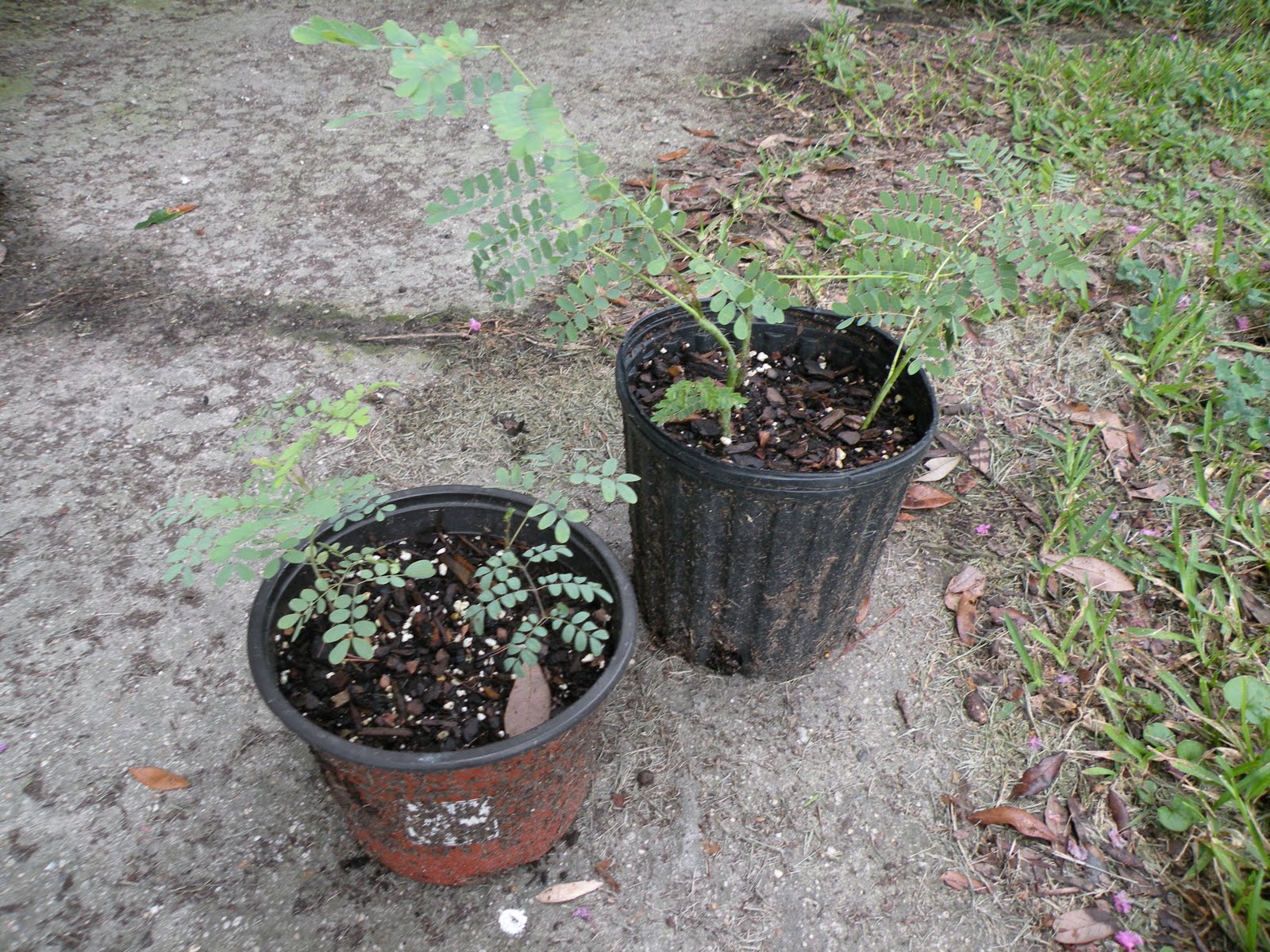
These are pots of Russian Sage. I love this plant because it blooms for months and the bees love the lavender colored flowers. The leaves are silver and smell strongly of sage if you brush against them. It get about 4-5 tall and wide and loves the sun. When spring rolls around, definitely get this plant for your garden (or I could root you some cuttings!).
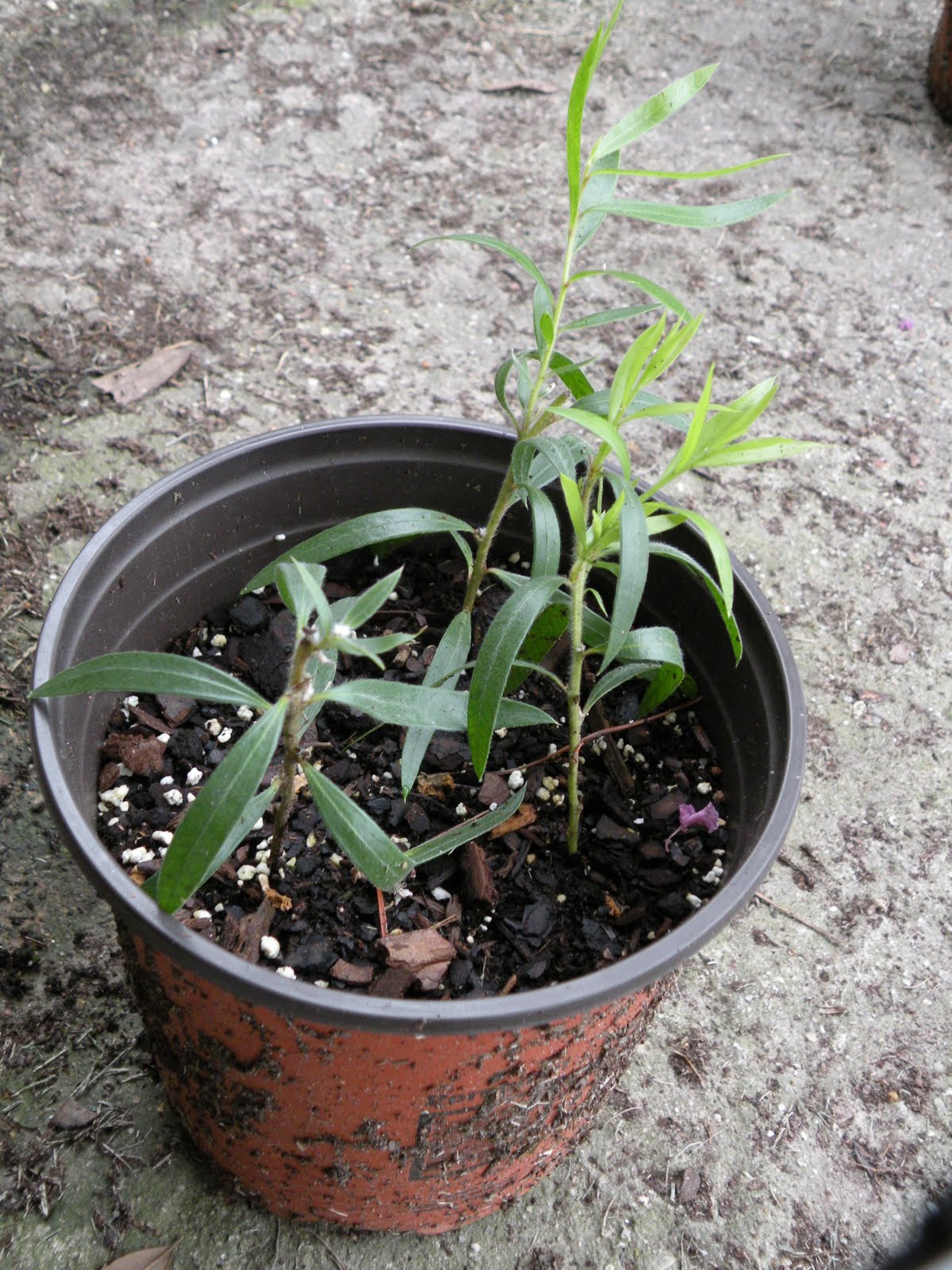
This is a picture of Bottlebrush cuttings. This is another plant that loves the sun and has neat bottlebrush shaped red flowers. Its also very easy to root from a cutting. Be careful where you plant this one! It gets around 10 feet tall.
Friday, July 16, 2010
Cicadas
Cicadas are really neat bugs. Did you know that the young cicada burrows down into the ground and "hibernates" for several years? Sometimes they can stay underground for up to 17 years! I read online that while underground, cicadas live by eating tree roots. You can read more about them here
The picture above is from my yard. This is the shell of a cicada that tunneled up through the ground and climbed on a lantana stem. Then, it popped out of its shell! Notice the "split seam" down the center of the shell.
Here is another cicada that climbed up my dog's pen. This seems to be a popular place for cicadas to shed their shells. I find so many empty cicada shells in his pen!
Wednesday, July 14, 2010
Mealybugs
Every year I get mealybugs on my Meyer Lemon tree. This year the mealybugs are everywhere! This tree is at my parent's house in Walker, LA. I'm hoping my dad will soon have time to spray the tree and kill the bugs. The best product to spray on citrus trees is Ultra Fine horticultural oil. It kills any pests on the tree and doesn't harm the fruit. I always wash the fruit before I eat it, that way any oil still left on the fruit will get washed off.
Here are some immature lemons. In the fall, I'm hoping to have a big lemon harvest.
This is my dad's quince tree with some immature fruit on it. The quince is around 4-5 inches long. They turn yellow when ripe.
His trees are about 10 feet tall and have lots of fruit! He grew the trees from seed and this is the first year they've set fruit. Quince trees not only produce fruit, they also make pretty flowers in the spring.
Cats
Here is Mike. He's about 3 years old and weights 15 pounds! He loves stuffing himself into boxes that are too small for him. He's sitting in an old corn dog box.
This is Kitty. She doesn't do much else except sleep on the sofa. She's a few years older than Mike and weights 11 pounds.
Subscribe to:
Posts (Atom)